Zoo Glass Is Not Storefront: Columbus Zoo’s North America Trek
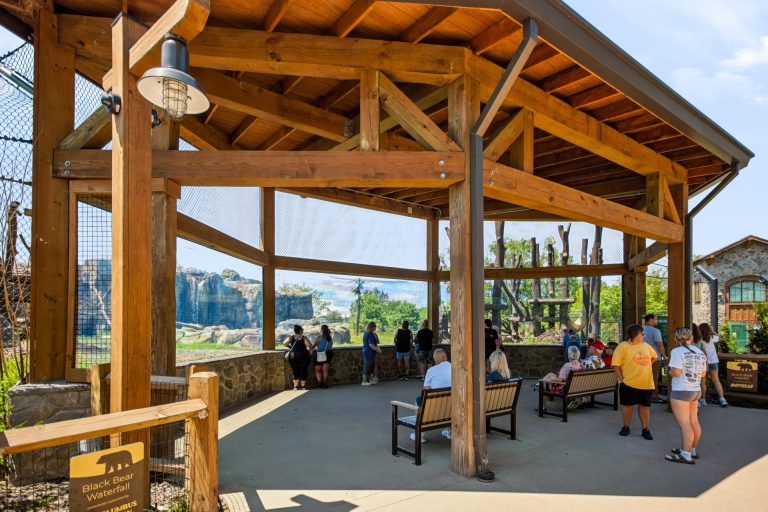
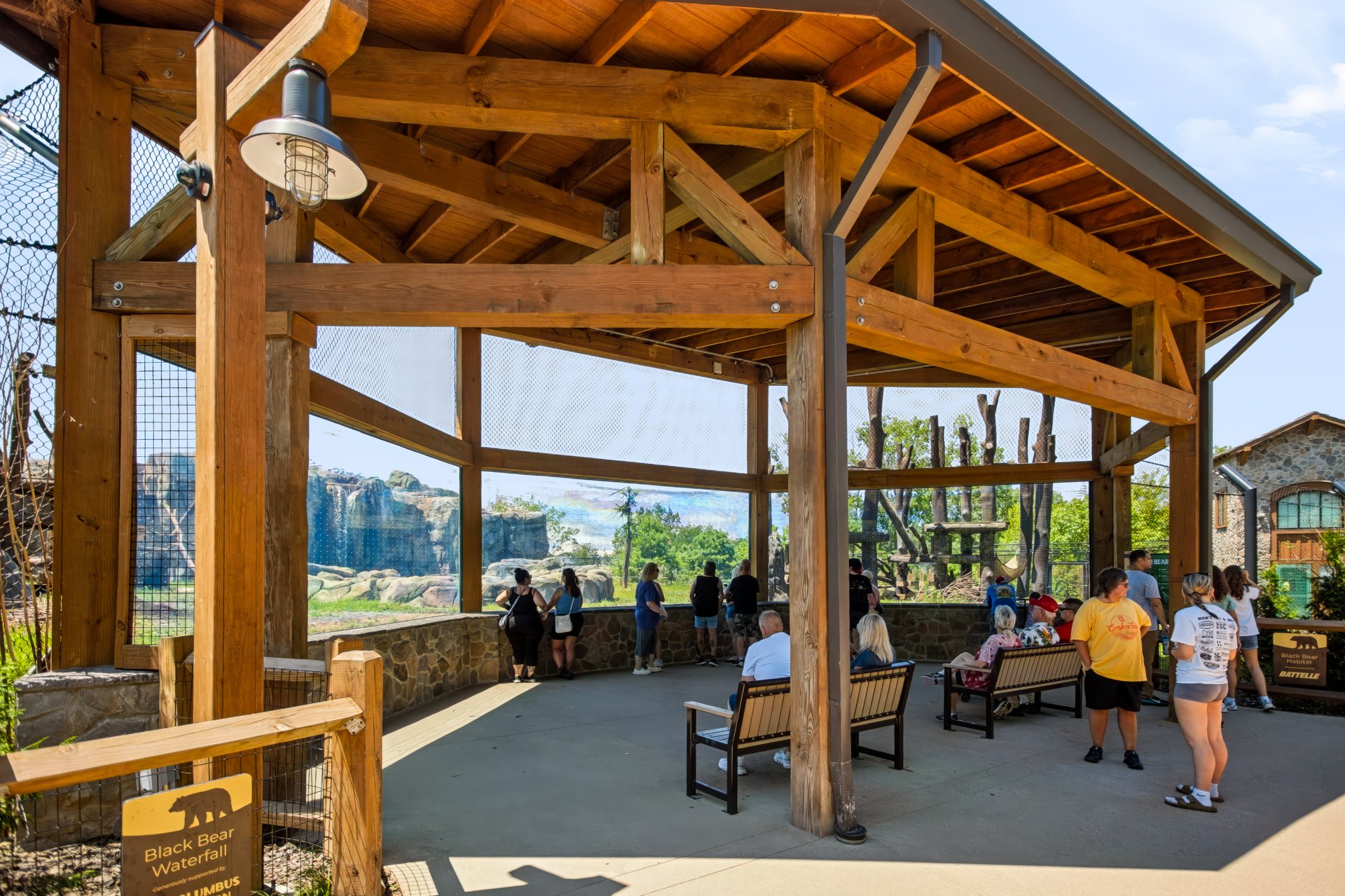
Two glass problems at one zoo in one year, and the zoo glass shop drawings for the package that was ours: laminated glass viewing walls in custom steel frames at five habitats, and a 3/8″ steel framing system at the gorilla enclosure.
Location Columbus, Ohio
Customer Assured Glass Services
Architect Peckham Guyton Albers & Viets, Inc. (PGAV Destinations) and Hasenstab Architects Inc.
Shop Drawings MP Drafting and Design
Drafters Kevin, Steve
On May 13, 2025, the Columbus Zoo and Aquarium announced that North America Trek would not open on the 23rd after all. Spectrum News had the reason: a large glass panel at the black bear habitat had been cracked during the final stages of construction. Nobody hurt, bear included. The rain took a share of the blame, and so did the bears themselves, who the zoo said needed time to settle in. You do not argue schedule with a black bear.
It opened June 20. Eight acres of the zoo’s oldest region rebuilt around black bears, Mexican wolves, bald eagles, river otters, and trumpeter swans, about $40 million, PGAV Destinations on design and Pepper Construction building it. By then the shop drawings were history, the way shop drawings always are by the time anyone cuts a ribbon.
So back up.
The Zoo Glass Scope
Assured Glass Services had the glazing, the same customer as the Barnett Branch library, which was a YKK package, which is to say it had a catalog. This one reads like this:
- Custom steel framing systems designed specifically for this job
- Bear, otter, wolf, eagle, and swan enclosures with laminated glass barrier / viewing walls
- Gorilla enclosure: 3/8″ steel framing system
No storefront. No curtain wall. Nothing with a series number. Every viewing wall is laminated glass in a custom steel frame that exists for one enclosure and nowhere else, and the gorilla enclosure got the heavy version, 3/8″ steel, to stand up to the strength of the animal behind it. If you draw storefront for a living, this is a different job with the same software.
Nobody Publishes a Bear Detail
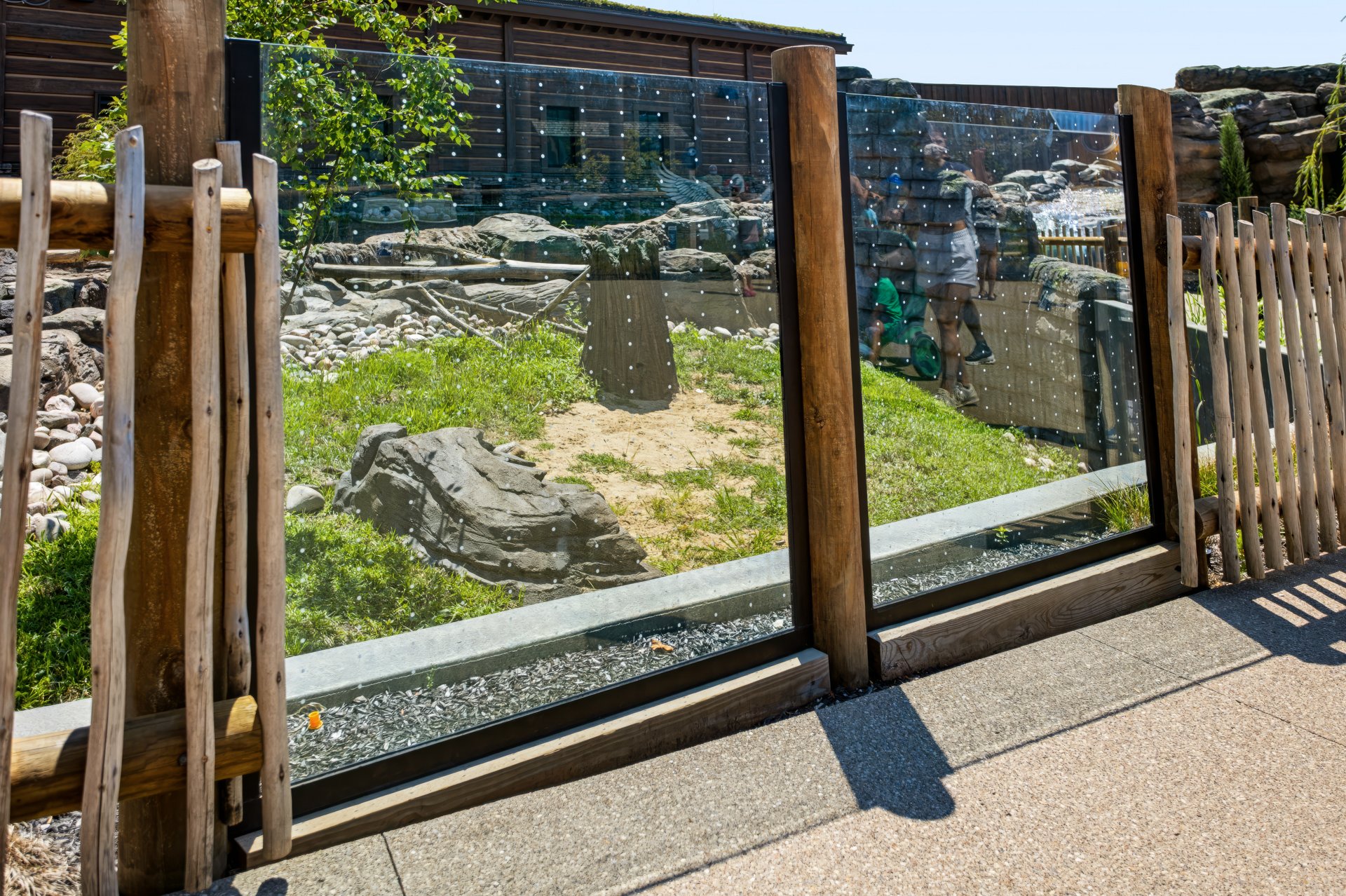
Here is the problem with a job like this. On a Kawneer or YKK package the catalog has already decided the bite, the glazing method, and what the head looks like. You apply it to the building. Zoo glass has no catalog, and neither does a steel frame that was invented for one otter pool. The glass makeup and the loads came from the PE. So did the size of every custom angle and fastener holding those frames together, worked out with the PE one condition at a time, which is where this job got hard. The edge conditions came from the exhibit design, and the dimensions came from the field, because hand-carved rockwork does not hold a tolerance the way a stud wall does.
So the set carries what a catalog normally carries. Angle sizes. Fastener sizes. Glass sizes and edge clearances, bite and setting at every edge, joint sizes, where the glass stops and the rock starts, drawn rather than assumed. Google gets asked how thick zoo glass is about fifty times a month, per the keyword tool. The answer is as thick as the PE says, repeated on every sheet so nobody rounds it.
Some of that is overkill for a swan. None of it is overkill for a gorilla. All of it is cheap next to a re-cut lite.
Laminated glass is the right material for a barrier wall for the reasons you already know: it holds together when it breaks and it does not scratch the way acrylic does. Its downside is that it cracks. The zoo met the downside in May.
The otters met acrylic’s in October.
The Otters Found the Caulk
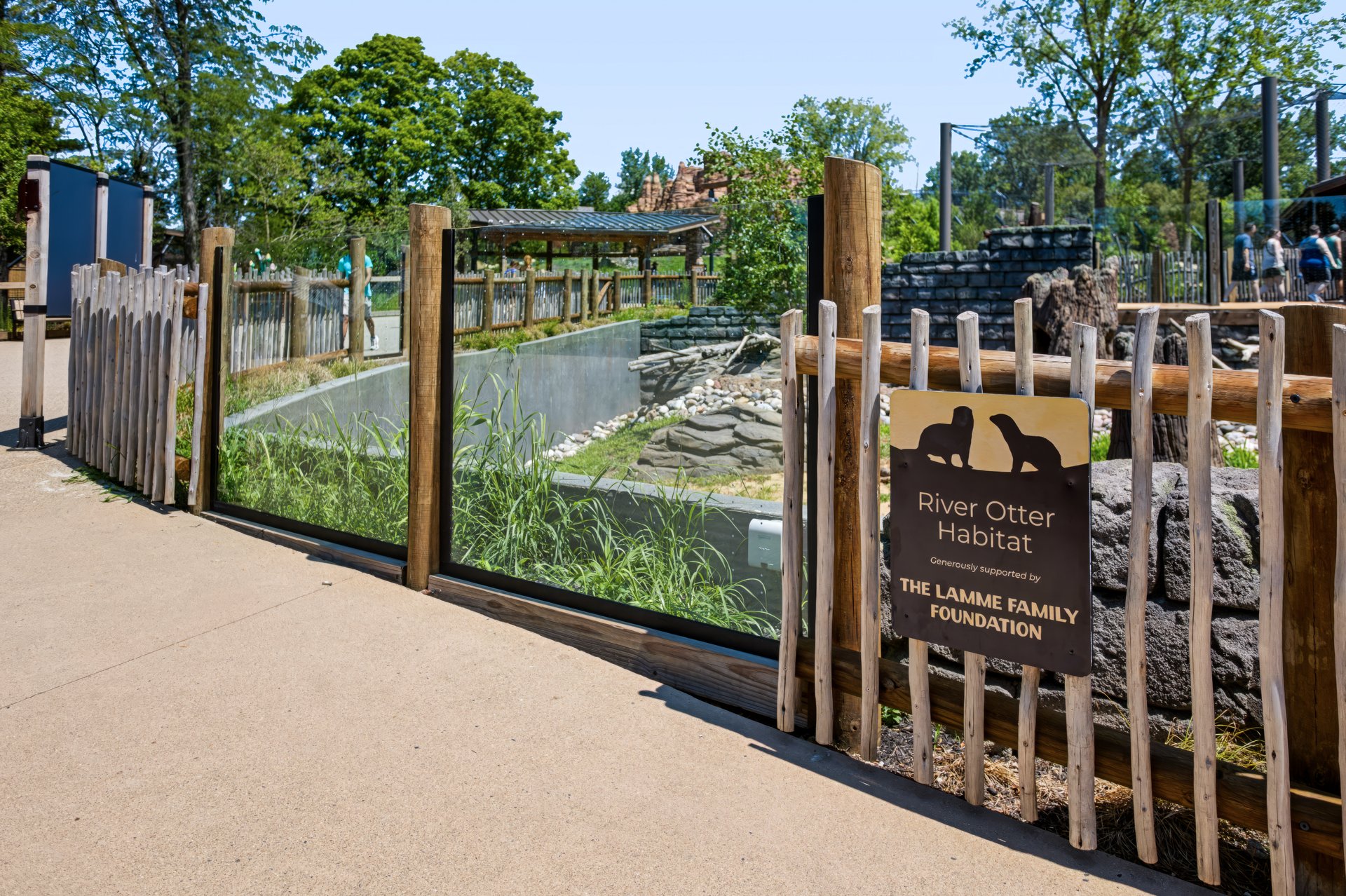
In October the Columbus Dispatch reported that the zoo was draining the otters’ 8-foot-deep pool for a month. The otters had been picking at the 3-inch strip of sealant along the underwater viewing panel. About $10,000 in repairs, plus reinforcement the zoo had not priced yet. Tyler Menke, the zoo’s vice president of planning, construction and facilities, told Ohio Magazine the viewing angles across the Trek were designed “so the animals could have that dominant view on us.” The otters took the dominant view of the caulk, too.
That panel is acrylic. It is not in this package, and it was never ours. We are telling you about it anyway, because it is the one thing from this job worth carrying to your next one: any joint on the animal side is a joint the occupant will test, with claws, teeth, and nothing else to do all day. Draw the protection over the sealant. Put it on the sheet, not in an RFI.
Need a Set Like This?
MP Drafting did the shop drawings on this one. If your next job has glass holding back something with claws, or steel framing no catalog covers, send us the architectural set and we will scope it.
Use Education to Get Ahead
Every missed deadline creates a ripple effect. Delayed fabrication, wrong orders, wasted time in the field. One way to cut that risk is by training your team to review drawings effectively.
LearnGlazing’s Shop Drawing Course makes it easier to spot issues before they become emergencies. Explore the course.
 Take the Course for Free